
Gold has always been a favorite investment among Indians. From jewelry and coins to modern digital investment products, the ways to invest in gold have evolved significantly over the years. In 2026, investors have more options than ever before, with physical gold, digital gold, and Gold ETFs emerging as the most popular choices.
But which one is best for you?
The answer depends on your financial goals, investment horizon, liquidity needs, and convenience preferences. Let’s compare these three forms of gold investment to help you make an informed decision.
Why Invest in Gold?
Gold remains an important asset because it offers:
- Protection against inflation
- Portfolio diversification
- A hedge against economic uncertainty
- High liquidity
- Long-term wealth preservation
Financial experts often recommend allocating 5–10% of your investment portfolio to gold as part of a diversified strategy.
What Is Physical Gold?
Physical gold includes:
- Jewelry
- Coins
- Gold bars and biscuits
This is the traditional way of owning gold and remains deeply rooted in Indian culture.
Advantages of Physical Gold
- Tangible asset that you can physically own
- Useful for cultural and ceremonial purposes
- Easily understood by most investors
- Can be pledged for loans
Disadvantages of Physical Gold
- Making charges on jewelry increase costs
- Storage and security concerns
- Purity verification challenges
- Selling may involve deductions and price differences
Physical gold works best for individuals who value ownership and may eventually use the gold for personal or family purposes.
What Is Digital Gold?
Digital gold allows investors to purchase gold online in small amounts through apps and investment platforms. The purchased gold is typically backed by physical gold stored securely by the provider.
Investors can start with very small amounts, making it highly accessible.
Advantages of Digital Gold
- Easy online purchase and sale
- Start investing with small amounts
- No storage concerns
- High convenience and accessibility
- Suitable for gradual accumulation
Disadvantages of Digital Gold
- Not directly regulated like some other financial products
- Storage charges may apply after certain periods
- Platform risks should be considered
- Limited long-term track record compared to traditional investments
Digital gold is ideal for investors who want convenience and flexibility without physically storing gold.
What Are Gold ETFs?
Gold Exchange-Traded Funds (Gold ETFs) are mutual fund schemes that invest in physical gold and trade on stock exchanges.
When you invest in a Gold ETF, you own units that represent gold holdings without taking physical delivery.
Advantages of Gold ETFs
- Highly transparent pricing
- Regulated investment product
- Easy to buy and sell through a demat account
- No storage or purity concerns
- Suitable for long-term portfolio diversification
Disadvantages of Gold ETFs
- Requires a demat and trading account
- Expense ratios slightly reduce returns
- Cannot be used for personal consumption like jewelry
Gold ETFs are particularly attractive for investors looking at gold purely as a financial asset.
Comparing the Three Options
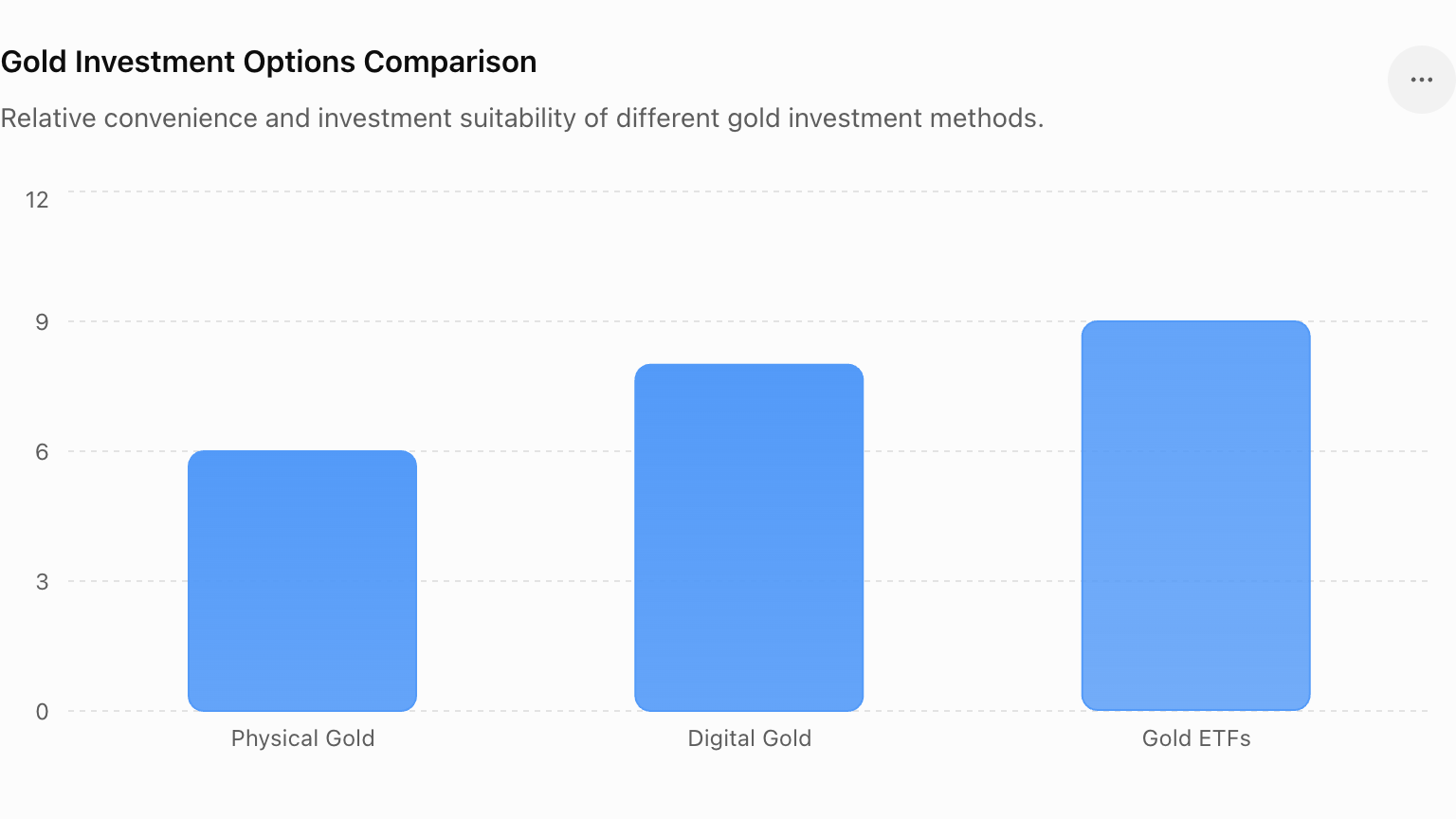
Physical Gold vs Digital Gold vs Gold ETFs
| Factor | Physical Gold | Digital Gold | Gold ETFs |
|---|---|---|---|
| Ownership | Physical possession | Digital ownership | ETF units |
| Minimum Investment | Relatively higher | Very low | Low |
| Liquidity | Moderate | High | High |
| Storage Risk | Yes | No | No |
| Purity Concerns | Possible | Usually standardized | No concerns |
| Regulation | Limited | Limited | Highly regulated |
| Investment Purpose | Consumption and investment | Flexible investing | Pure investment |
Which Option Is Best in 2026?
Choose Physical Gold If:
- You plan to use it for jewelry or gifting.
- You prefer owning tangible assets.
- Cultural and family preferences matter.
Choose Digital Gold If:
- You want convenience and flexibility.
- You prefer investing small amounts regularly.
- You do not want storage hassles.
Choose Gold ETFs If:
- Your primary objective is investment and portfolio diversification.
- You want a regulated and transparent investment product.
- You already have a demat account.
Should You Invest Only in Gold?
Although gold remains an important asset, it should not dominate your investment portfolio.
Gold works best when combined with:
- Equities for long-term growth
- Debt instruments for stability
- Emergency savings for liquidity
A diversified portfolio generally provides better risk-adjusted returns than concentrating entirely in one asset class.
Final Thoughts
In 2026, investing in gold is no longer limited to buying jewelry or coins. Digital innovation and financial products have made gold investing more accessible and efficient than ever.
Physical gold remains valuable for emotional and cultural reasons. Digital gold offers unmatched convenience for small investors. Gold ETFs stand out as one of the most efficient options for investors seeking regulated, transparent, and hassle-free exposure to gold.
The best choice ultimately depends on your financial goals and investment preferences. Rather than asking which form of gold is universally better, the right question is:
Which form of gold aligns best with your investment objectives?
Looking to build a diversified investment strategy?
UrbanMoney helps you make smarter financial decisions with expert insights and practical guidance on investing, borrowing, and long-term wealth creation.