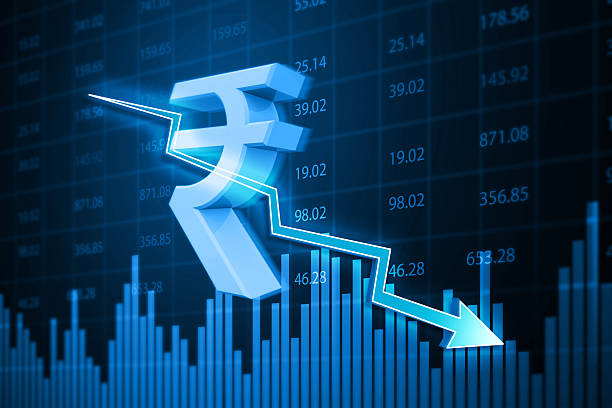
Every few months, headlines often report that the Indian Rupee has weakened against the US Dollar. This usually raises concerns among investors, businesses, and ordinary consumers. Questions like “Why is the Rupee falling?” and “How does it affect me?” become increasingly common.
Currency movements are a natural part of the global economy, and a weakening Rupee doesn’t necessarily indicate an economic crisis. However, understanding why currency depreciation happens can help individuals make better financial and investment decisions.
Let’s break it down in simple terms.
What Is Currency Depreciation?
Currency depreciation occurs when the value of one currency falls relative to another.
For example, if one US Dollar could previously buy ₹82 and now buys ₹87, it means the Indian Rupee has depreciated against the US Dollar.
In simple terms, a weaker Rupee means you need more Rupees to purchase the same amount of foreign currency.
Why Does the Rupee Weaken?
Several factors influence the value of a currency. Usually, it is a combination of domestic and global events rather than one single reason.
1. Higher Demand for US Dollars
India imports a significant amount of:
- Crude oil
- Electronics
- Machinery
- Gold
These imports are largely paid for in US Dollars.
When Indian companies need more dollars to pay for imports, demand for the US currency rises. Higher demand for dollars can put pressure on the Rupee and cause it to weaken.
2. Rising Crude Oil Prices
India imports a large portion of its energy requirements.
When global oil prices increase:
- Import bills rise
- More dollars are required for payments
- Pressure on the Rupee increases
This is one of the key reasons why oil price movements often influence the value of the Indian currency.
3. Global Economic Uncertainty
During periods of geopolitical tensions, financial crises, or market volatility, investors often move money toward assets considered safer, particularly the US Dollar.
This phenomenon is known as a flight to safety.
As global demand for dollars rises, many emerging market currencies, including the Rupee, may weaken.
4. Capital Outflows
Foreign investors play a significant role in Indian financial markets.
If foreign investors:
- Sell Indian stocks or bonds
- Shift investments to other markets
- Seek safer assets abroad
they convert Rupees into Dollars, increasing demand for dollars and putting downward pressure on the Rupee.
5. Interest Rate Differentials
Interest rates influence international capital flows.
When interest rates in developed economies, especially the United States, rise significantly:
- Global investors may move funds toward higher-yielding dollar assets
- Emerging market investments become relatively less attractive
- Demand for dollars increases
This can contribute to the depreciation of currencies such as the Rupee.
6. Trade Deficit
A trade deficit occurs when a country imports more goods and services than it exports.
India often experiences trade deficits due to high import demand.
A larger trade deficit means:
- More dollars leave the country
- Demand for foreign currency increases
- Pressure on the domestic currency rises
Persistent trade imbalances can influence exchange rates over time.
How Does a Weaker Rupee Affect You?
Currency depreciation affects both businesses and consumers in several ways.
Higher Fuel Prices
Since crude oil imports become more expensive, transportation and fuel costs may increase.
Rising Prices of Imported Goods
Products such as:
- Electronics
- Smartphones
- Imported appliances
- International travel services
may become more expensive.
Higher Inflation
As import costs rise, businesses often pass these costs on to consumers.
This can contribute to broader inflation in the economy.
Increased Education and Travel Expenses Abroad
A weaker Rupee means:
- Overseas education becomes more expensive
- Foreign travel costs rise
- International purchases require more money
Are There Any Benefits of a Weak Rupee?
Yes. Currency depreciation is not entirely negative.
Export Competitiveness Improves
Indian goods and services become relatively cheaper for foreign buyers.
Industries such as:
- Information technology services
- Pharmaceuticals
- Textiles
- Manufacturing exports
may benefit from a weaker currency.
Higher Value of Foreign Earnings
Individuals and businesses receiving income in foreign currencies may receive more Rupees when converting their earnings.
This can benefit:
- Exporters
- Freelancers serving international clients
- IT companies
- Non-Resident Indians (NRIs)
What Does It Mean for Investors?
Currency movements can influence investment decisions.
Equity Markets
Some export-oriented companies may benefit from a weaker Rupee, while import-dependent businesses may face cost pressures.
Gold Prices
Gold is priced internationally in US Dollars. A weaker Rupee can contribute to higher domestic gold prices.
Inflation and Interest Rates
Persistent currency depreciation may increase inflationary pressures, which can influence monetary policy and interest rates.
Should Investors Worry About a Weak Rupee?
Short-term currency movements are normal and occur in every economy.
Rather than reacting emotionally, investors should:
- Maintain diversified portfolios
- Focus on long-term financial goals
- Avoid making investment decisions solely based on currency movements
- Monitor economic developments calmly
Currency fluctuations are simply one of many factors that influence financial markets.
Final Thoughts
Currency depreciation happens when the value of one currency falls relative to another. The Indian Rupee can weaken due to factors such as rising import demand, higher oil prices, global uncertainty, capital outflows, and trade deficits.
While a weaker Rupee can increase inflation and make imports more expensive, it can also support exports and boost foreign earnings.
For individuals and investors, the key takeaway is to understand that currency movements are a natural part of economic cycles. Staying informed, maintaining diversification, and focusing on long-term financial planning can help you navigate periods of currency volatility with confidence.
Want to stay updated on market trends and make smarter financial decisions?
UrbanMoney brings you expert insights on investing, borrowing, and economic developments to help you build long-term financial confidence.